Posted this on a Hubspot article blog. here is the link.
I’ve been fortunate enough to work my way up from being a BDR at Experian Marketing Services and an AE at LinkedIn Learning all the way to where I am now. As the head of business development at Untap Your Sales Potential, we coach and train the top 1% of sellers at SAP, Microsoft, Gong, AWS, Google Cloud, Salesforce, HubSpot, and other blue-chip companies.
Sales is an interesting landscape, because even the top sales companies don’t really offer you solution-selling training. They give you product knowledge, yes — but ironically, that’s probably one of the most useless things when it comes to closing deals.
Think about it for a second: When you go to a luxury clothing store, they ask you questions like “Is this for a special occasion?” “Is it an anniversary or birthday present?” “Is it for your mom or wife?” These questions allow you to feel seen and heard and show that there isn’t a one-size-fits-all strategy.
If the sales rep didn’t get to know your needs, budget, appetite, and history, and just went straight to talking about how great the product is, you’d feel like they were lacking the emotional intelligence to read the room better.
In other words, sellers must have curiosity and ask thoughtful, intentional questions in order to understand the full picture.
Remember: You can’t sell a solution if you don’t know the problem you’re solving for.
Table of Contents
- What is solution selling?
- When is solution selling used?
- Why is solution selling effective?
- Solution Selling: Benefits and Disadvantages
- How I Approach the Solution Selling Process
- Solution Selling Books
Solution selling is a consultative sales approach where the rep focuses on diagnosing the prospect’s specific pain points and then offering a tailored solution, rather than simply pitching a product. Instead of leading with features or benefits, you lead with questions, curiosity, and a mindset of service.
In strategic selling, there’s a concept called point of view, which means having a hypothesis based on your research and understanding what keeps your prospect up at night. It’s about using relevant client stories and speaking to the hero’s journey — showing how you’ve helped others overcome similar challenges.
For those of you who aren’t familiar with the concept, here’s what the storytelling framework looks like through a seller’s lens:
- Hero. Your client (not you!).
- Mentor. You, your team, or your solution.
- Ordinary World. Their old process.
- Call to Adventure. The challenge they faced.
- Tests and Ordeals. Obstacles and doubts along the way.
- Reward and Return. The transformation, ROI, or breakthrough they gained.
Let’s say I’m speaking to a high-achieving rep who’s been promoted every year from SDR to SMB AE to MM AE, and now they’re six months into their first Enterprise AE role.
My hypothesis might be:
“Hey Robby, I’d imagine you’re feeling a bit overwhelmed, trying to figure out how you landed this role over sellers with 20 years more experience. There’s probably a bit of impostor syndrome that comes with this new territory. Are you wondering: How do I best prioritize my accounts? How do I expand these large contracts? Am I working on the right activities?”
When you check in with them, they’ll correct you if you’re off — but at least it shows you’ve done your homework and truly understand what’s on their mind. It gives them a sense of being seen and heard. Not only does it show credibility, but it opens up avenues for them to elaborate on certain topics.
Your prospect might reply with something like this:
“Oh, wow, it’s like you’ve read my mind. Yes, I do feel a bit overwhelmed, like I lucked my way into this career path with so much upside not only in earning potential, but also in working with world-class clients. It sounds like you certainly have thought about this problem, and it seems like you’re well-versed in fixing a lot of issues that have come up recently and are causing me to overthink things…”
When you hear statements like that, you know you’re on the right track.
I’ve learned that the key is to speak less and allow prospects the space to share openly and honestly — and don’t interrupt them. Silence will allow others to give you information that would be more helpful than pitching a product.
For the longest time, I was uncomfortable with silence. Living in the living room in a one-bedroom apartment with a family of five taught me that there’s always some conversation going on, and I had to learn that silence is your friend. It will cause people to open up because everyone wants to be heard, especially in today’s noisy environment with so many talking heads.
When is solution selling used?
Solution selling is certainly more geared towards highly complex consultative sales, so use it with high-value or customized solutions where there are multiple stakeholders.
For example, as a summer gig in college, I sold Verizon Fios door-to-door. In those cases, it would be overkill if I leveraged solution selling (although I would argue in any type of sales it’s always more valuable to ask questions rather than straight pitching).
In contrast, if your product or service needs to be tailored to each customer — like enterprise SaaS, large services contracts, or anything that impacts multiple teams or systems — solution selling is your best bet.
Unfortunately, not many companies teach you about solution selling, as everything is always focused on teaching reps why their product is great and why the competitor sucks.
If you think about it, if you have a friend who is always talking about how awesome they are and they are bashing other people or gossiping about others all of the time, it makes you wonder, “Man, what is Johnny saying about me when I’m not in the room?”
I made the mistake of bashing Salesforce Marketing Cloud once when I was at Experian Marketing Services, and I had a client respond back to the email and say it was distasteful. That made me realize that the tactic was a poor reflection of my character. (More on how that plays into selling later on.)
Why is solution selling effective?
With solution selling, you’re guiding a prospect through change. And when buyers are navigating new strategies, digital transformation, or shifting how they operate, they need a consultative partner, not just a vendor.
I lean heavily on solution selling when working with enterprise clients who might not even know the full scope of what’s costing them money or holding them back.
It’s especially effective when:
- You’re moving up-market into larger accounts. Perhaps you were able to grind your way into landing a commercial AE position from being a hard-working SMB rep. Now you need to be more strategic instead of just pounding the phones. You’ll have to do the deep work required to get to the next level.
- You’re selling a product that’s not an obvious “need-to-have.” Being able to connect the dots for a prospect is essential. Don’t lay all the track work, but then forget to communicate to the client how it connects for them specifically. Linkage is important. Your prospect has to be able to envision your solution and trust that it applies within their specific circumstances.
Solution Selling: Benefits and Disadvantages
We’ve all made the mistake of pitching way too early without truly understanding the big picture for our prospect. Even with smaller deals, when you take the time to actually find out what their need is instead of talking about your solution, you will help them feel heard and understood.
Some of the benefits of solution selling I’ve seen are that it:
- Builds long-term relationships rooted in trust.
- Creates a stronger alignment with buyer goals.
- Leads to higher deal sizes and better retention.
- Ideal for complex, consultative sales environments.
Are there disadvantages to solution selling? A few. That’s because solution selling:
- Requires more time upfront (discovery, research).
- Doesn’t scale easily in transactional sales.
- Demands high EQ and business acumen.
- Can frustrate impatient reps or buyers.
Another benefit I realized? Solution selling taught me to slow down to speed up. It’s not about racing to the close — it’s about building to it with intention. The best reps aren’t spreading themselves too thin; they are uber-focused on the best deals with the most upside.
I cringe when I think back to when I was the only territory rep for the Northeast down to the DMV region, and I was overwhelmed with the amount of inbound leads. Looking back on it, I should have led with curiosity. I ended up doing well, but I know now that there was a lot of room on the table. I could have slowed down and been a lot more consultative instead of rushing prospects to do a same-day discovery and demo because I thought I had too much on my plate.
That’s another thing I learned from solution selling: It’s about working on the right activities. Figuring out what those are takes time. You need to slow down and be thoughtful about what really moves the needle.
Like most sellers, I used to be in a place of survival and couldn‘t slow down to think more strategically. Many of us take the path of least resistance. In the short term, it’s easier to be an order taker and still get revenue to add to your quota attainment, but sometimes it’s about the prospecting activities that get your foot in the door with the clients who can be whales.
How I approach the Solution Selling Process
BANT and MEDDIC are so outdated. I know that’s going to ruffle some feathers, because many of you paid a lot of money to these trainers. But if you think about it, no one wants to be interrogated for an hour.
Instead, I like to use PREDICT.
PREDICT is an acronym Ian Koniak (former #1 Seller at Salesforce in the Enterprise division) uses to guide high-performing sellers through a values-based, consultative sales process.
- P – Problem: Understand the true business problem.
- R – Root Cause: Identify what’s really causing the issue.
- E – Emotion: Uncover the emotional pain or urgency behind the problem.
- D – Decision Criteria: Clarify how decisions will be made and who’s involved.
- I – Impact: Quantify the business and personal impact of solving (or not solving) the issue.
- C – Champion: Find the internal advocate who will sell on your behalf.
- T – Timeline: Establish urgency and lock in next steps.
This is a modern take on the traditional solution selling process because it incorporates the emotion behind why this is urgent.
As I discussed earlier, I think the linkage portion is missing from most solution selling thought leaders. At the end of the day, if prospects don’t see how your solution could work for them and their specific industry, region, or context, then you have wasted time and energy for nothing. So, don’t forget to clearly link your solution with your prospect’s specific pain point.
Here are some other tips on how I like to approach solution selling:
- Have an honest conversation with your prospect. Keep it casual.
- Use a note-taker so you’re not scribbling like your life depends on it, and so you can be present during the call or meeting.
- Don‘t be afraid to embrace the silence. With enough space, a prospect will eventually open up with what’s really going on and the biggest problems. (In-person meetings will always be more candid.
Here are three impactful resources from Brandon Fluharty, Jamal Reimer, and Marcus Chan that have significantly influenced my approach to solution selling.
1. Brandon Fluharty’s Design Thinking in Sales
Resource: How to Design Bigger Deals in SaaS Sales
How I’ve Used It: Brandon’s approach to integrating design thinking into sales has transformed how I engage with clients.
- Ethos: Fluharty speaks about how we all think of ethos, which is the credibility, authority, and the character of your reputation. How do you improve your character? This isn’t discussed too often in sales books, but it matters because if you say you are going to send something, are you actually going to execute on what you say you will?
If you do, this will build credibility and trust. If you have a good reputation, it will be noticed. After all, it’s the little things that people notice. This helped me realize that even the little things I say I’m going to do? I treat them very seriousl now, whereas before I didn’t realize I was over-promising just because I was people-pleasing.
- Pathos: Fluharty uses the concept of pathos to teach how to appeal to the emotional side of your prospects. This is all about their current emotional state, their desired end-game emotional state, and you getting them to that point appropriately.
- Logos. Fluharty also reminded me to make sure my communication is clear and has a call to action. Too often, I’ve spent time on deals and then wondered why they stall. Upon reflection, it’s as simple as not having a clear next step. Without a clear game plan you’re wasting valuable time.
2. Jamal Reimer’s Two Mountain Model
Resource: The 5 Point Framework I Used to Close Three $50M Deals
How I’ve Used It: Reimer’s model is built on the analogy of a mountain, where your goal as a rep is to climb the mountain as quickly as possible because those who hold all the budget and decision-making powers are at the summit. The illustration below gives more detail on this.
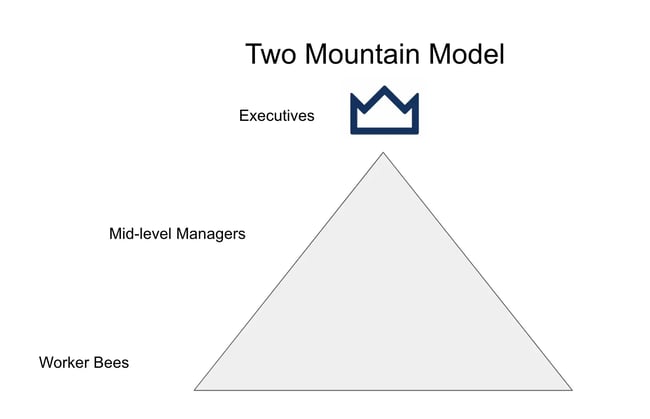
It’s a very simple concept, but harder to execute. It helped me realize that the more executive access I have, the more energy involved — and the more likelihood that the deal will move quickly.
For instance, when I was working with the head of cloud technologies at Samsung, it was so much easier to advance a deal than when I’m working with project managers who ultimately can’t really do much even if they love you as a person.
3. Marcus Chan’s H.E.A.R.T. Framework – Handling Objections with Empathy
Resource: The HEART method to navigate and resolve client objections effectively
How I’ve Used It: This framework helped me validate what prospects were going through, acknowledging that their concerns were valid. This allows them to say everything they need to get off their chest, and in turn, I’m able to close for a next-steps meeting a bit more organized instead of being all over the place.
Here’s the framework:
- Hear. Actively listen to the client’s concerns.
- Elaborate. Encourage the client to provide more details.
- Aside. Aside from budget and not having enough time, is there anything else that would prevent us from working together? This allows you to isolate the problem and make sure there aren’t other reasons why it might not work.
- Re-clarify the value: Reiterate the benefits and value of the solution. It could look like: “So what was the reason why you checked out the webinar?” Or, “It sounds like you haven’t been hitting your numbers the last couple of years, and you’re questioning if you want to stay in sales still.”
- Transition to close. Guide the conversation towards a resolution. What would happen if nothing changed? This part can be uncomfortable for people who are recovering from people-pleasing tendencies.
Solution Selling is a Partnership
At its core, solution selling is about partnering with real people to solve meaningful problems. It’s really all about relationships at the end of the day.
I remember being inspired when one of my clients at our Mastermind acknowledged my persistence in front of our peers. The client said if I hadn’t challenged him and pushed him to improve, he wouldn’t be there speaking to 100 of the top SaaS reps in the world, sharing his journey. It was one of those moments where I felt really connected to how impactful a career in sales can be.
If you want to succeed with solution selling, it starts with who you choose to be.
- Be the kind of rep who leads with empathy, curiosity, and integrity.
- Do the work and dig deep in discovery, map the real problem, and co-create meaningful outcomes.
- Have the results. Stronger client trust, bigger deals, and a reputation as someone who solves, not just sells.
That’s where the real magic happens. And that’s what makes solution selling so powerful.